Stainless steel cookware has a reputation problem. Ask most home cooks why they avoid it and you'll hear the same answer: everything sticks. Eggs weld themselves to the surface. Fish tears apart. Chicken skin rips off instead of releasing cleanly.
Here's the thing: none of that is the fault of stainless steel. It's the fault of technique. Cook with stainless steel the right way and food releases cleanly, develops better colour than it ever would in a non-stick pan, and you end up with those caramelised bits on the base of the pan that make sauces worth eating.
This guide covers exactly what you need to know to cook confidently in stainless steel: from the first time you put a pan on the heat to the moment food hits the plate.
Why Stainless Steel Behaves Differently
Non-stick pans have a coating—typically PTFE or ceramic—that creates a physical barrier between the food and the pan surface. Stainless steel has no such coating. At a microscopic level, the surface of a stainless steel pan has tiny pores that expand and contract with temperature changes. When you place cold food into a cold or insufficiently heated pan, those pores grip the food and hold it.
Heat the pan correctly first, and those pores close up. The food makes contact with a smooth, even surface and releases naturally once the proteins have had a chance to set. That's the entire principle behind cooking successfully in stainless steel. Once you understand it, the technique becomes second nature.
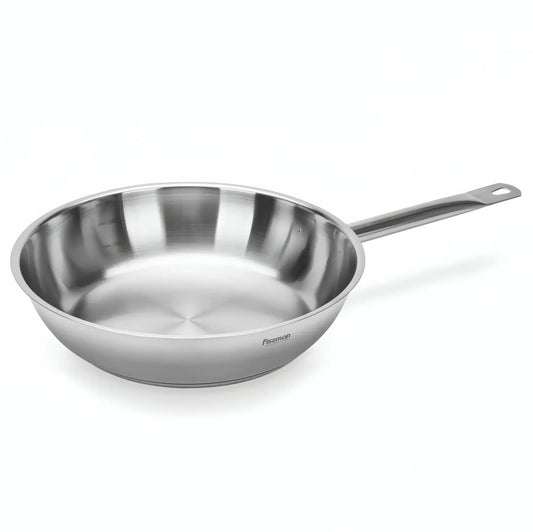
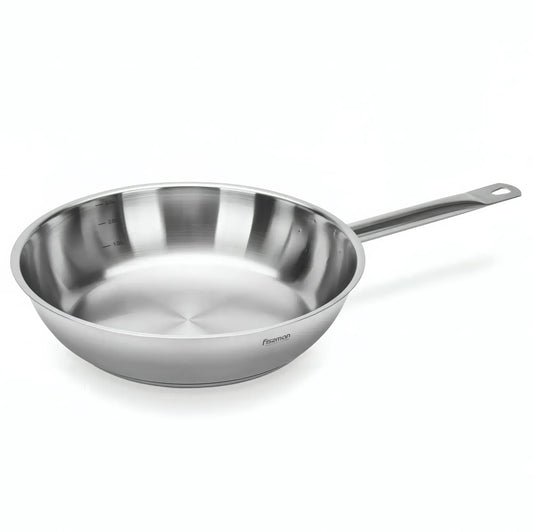
The other factor is the encapsulated aluminium base found in quality stainless steel cookware like Fissman's range. Pure stainless steel is actually a poor heat conductor: it heats unevenly and creates hot spots. The aluminium core sandwiched between layers of stainless steel solves this, distributing heat evenly across the entire base so you get consistent cooking across the whole surface rather than scorched patches in the centre.
The Most Important Step: Preheating Properly
If there's one thing to take from this article, it's this: always preheat your stainless steel pan before adding oil or food.
Place the empty pan on medium heat and leave it for two to three minutes. The pan needs to reach an even temperature throughout, not just hot in the centre. You'll notice the pan changes colour slightly as it heats, taking on a faint iridescent sheen. That's normal and harmless.
The temptation is to rush this step, especially when you're cooking quickly on a weeknight. Resist it. An underheated pan is the single most common cause of sticking in stainless steel.
How hot is hot enough? That's where the water droplet test comes in.
The Water Droplet Test
Flick a few drops of water into the preheated pan. What happens tells you exactly where you are:
Water sizzles and evaporates immediately: the pan isn't hot enough yet. Keep heating.
Water forms a single bead that skitters and rolls around the surface: this is the Leidenfrost effect, and it's the signal you're looking for. The pan is at the right temperature. Add your oil now.
Water immediately vaporises into steam with a violent sizzle: the pan is too hot. Remove it from the heat for thirty seconds and test again.
The Leidenfrost effect occurs when the pan surface is hot enough to instantly vaporise the bottom of the water droplet, creating a thin layer of vapour that lifts the droplet and lets it glide across the surface. When your pan reaches this point, it's ready.
When and How to Add Oil
Once the pan passes the water droplet test, add your oil and swirl to coat the base. The oil should shimmer and flow easily across the surface. if it smokes immediately, the pan is slightly too hot and you should reduce the heat before adding food.
Which oil to use?
For high-heat cooking—searing steak, frying chicken, browning vegetables—use an oil with a high smoke point. Refined avocado oil, rice bran oil, and light olive oil all work well. Extra virgin olive oil has a lower smoke point and can burn at the temperatures needed for a proper sear, though it's fine for lower-heat cooking like sautéing onions or garlic.
How much oil?
Less than you might think. A thin, even coating across the base is all you need. You're not deep frying: you're creating a thin barrier between the food and the pan surface. Two teaspoons is usually enough for a 26cm frying pan.
Why Food Sticks Initially And Then Releases
Here's something that trips up a lot of first-time stainless steel cooks: when you place food in a properly preheated, oiled pan, it will often stick briefly at first. This is normal. It's not a sign that something has gone wrong.
What's happening is the Maillard reaction: the browning process that develops flavour, colour, and texture on the surface of food. During this process, the proteins in the food are bonding with the pan surface. Once the Maillard reaction completes and a proper crust has formed, those bonds break and the food releases cleanly on its own.
The critical mistake is trying to move or flip the food before it's ready. If you place a chicken breast in the pan and try to slide it after thirty seconds, it will tear and stick. Leave it alone for three to four minutes and it will release with almost no resistance when the crust has formed.
The rule: if food resists when you try to move it, leave it alone and wait. It will tell you when it's ready.
This is the behaviour that makes stainless steel particularly good for searing. The direct contact between food and bare metal, and without a coating in the way, produces significantly better browning and crust development than a non-stick pan can achieve at equivalent temperatures.
What to Cook in Stainless Steel (And What to Avoid)
Stainless steel excels at tasks where browning and crust development matter:
Works brilliantly:
- Searing steak, lamb chops, and pork cutlets
- Browning chicken pieces and skin-on cuts
- Sautéing onions, garlic, and vegetables
- Pan sauces: the fond (browned bits) left in a stainless steel pan after searing is the foundation of excellent pan sauces
- Stir-frying at high heat
- Boiling pasta, blanching vegetables, and making soups in stainless steel saucepans
Requires more care:
- Fish fillets: use more oil, make sure the pan is properly preheated, and don't touch the fish until it releases naturally
- Eggs: scrambled and fried eggs are possible in stainless steel but require lower heat and more fat than a non-stick pan. Many cooks keep a small non-stick pan just for eggs
Avoid:
- Cooking highly acidic foods like tomato sauce for extended periods in uncoated stainless steel: the acid can react with the metal over time and affect flavour. Fine for short cooking, but use an enamelled pot for long tomato braises
Common Mistakes
Heat too low. The most common error. Low heat means the pores never close up and food sticks throughout cooking. Medium to medium-high heat for most tasks.
Skipping the preheat. Putting oil in a cold pan and then heating both together doesn't achieve the same result. Heat the pan first, then add oil.
Adding food straight from the fridge. Cold food dropped into a hot pan drops the surface temperature dramatically and increases the chance of sticking. Let proteins like steak and chicken rest at room temperature for fifteen to twenty minutes before cooking.
Moving food too early. As covered above, the Maillard reaction needs time. Leave it.
Overcrowding the pan. Too much food at once drops the pan temperature and causes steaming rather than searing. Cook in batches if needed, especially when browning meat.
Using too little oil. You don't need a lot, but you need enough to coat the base evenly. A dry patch is a sticking patch.
Common Questions About Cooking With Stainless Steel
Why do my eggs keep sticking to my stainless steel pan?
Eggs are the most temperature-sensitive food you can cook in stainless steel. The proteins in eggs set quickly and bond to the pan surface at high heat. The fix is lower heat than you think you need, more fat than you'd use in a non-stick pan, and patience. Preheat the pan on medium-low, add butter or oil and let it coat the surface fully, then add your eggs. Don't touch them until the whites have set around the edges. A properly preheated stainless steel pan at the right temperature will release eggs cleanly but requires more attention than a non-stick pan. Many cooks keep a small non-stick pan specifically for eggs and use stainless steel for everything else.
Do I need special oil for eggs in stainless steel?
No special oil required—but fat choice matters more for eggs than for other cooking. Butter works particularly well because the milk solids create an additional barrier between the egg and the pan surface, and the lower smoke point of butter suits the lower heat eggs need. A neutral oil like rice bran or light olive oil also works. Avoid cooking spray, as it can leave a residue that builds up on stainless steel over time and becomes difficult to remove.
Should I use butter on stainless steel?
Yes. Butter works well in stainless steel for lower-heat cooking like eggs, sautéed vegetables, and pan sauces. The key is not to add butter to an excessively hot pan, as it will burn before the food has a chance to cook. For high-heat searing, use a high smoke point oil first and finish with a knob of butter in the last minute of cooking for flavour and colour. This is a technique used in professional kitchens: the oil handles the heat, the butter handles the flavour.
Can you use olive oil on stainless steel?
Yes, with some caveats. Extra virgin olive oil has a relatively low smoke point—around 190°C—which makes it unsuitable for high-heat searing in stainless steel. At high temperatures it will smoke, break down, and can leave a sticky residue on the pan surface. For lower-heat cooking, like sautéing garlic and onions, warming sauces, or cooking vegetables over medium heat, extra virgin olive oil is perfectly fine. For high-heat tasks, use refined olive oil, which has a higher smoke point, or switch to rice bran, avocado, or grapeseed oil.
How do you make stainless steel non-stick?
The short answer is that you don't need to make it non-stick, you need to use the right technique. Proper preheating, the water droplet test, adding oil at the right moment, and not moving food before it releases naturally will handle the vast majority of sticking issues without any additional treatment. Some cooks season their stainless steel pans with a thin layer of oil baked onto the surface—similar to seasoning cast iron—which can reduce sticking further. To do this, heat the pan on medium, add a few drops of high smoke point oil, wipe it across the surface with a paper towel, and heat until the oil just begins to smoke. Remove from heat and wipe away any excess. Repeat two or three times. It's not necessary, but it does help.
What should you never put in a stainless steel pan?
- Bleach and chlorine-based cleaners: chlorine attacks the chromium oxide layer that gives stainless steel its corrosion resistance. Never use bleach on stainless steel cookware
- Steel wool and abrasive scrubbers: these scratch the surface and can create areas where rust and corrosion develop over time. Use a soft cloth or non-scratch sponge
- Prolonged salt water: adding salt to cold water and leaving it to sit before heating can cause pitting on the pan surface. Add salt after the water has come to a boil
- Highly acidic foods for extended periods: a splash of lemon juice or a quick tomato pan sauce is fine, but slow-cooking a tomato-based braise for several hours in uncoated stainless steel can affect both the pan and the flavour of the food over time
What foods damage stainless steel?
Salt is the biggest culprit: specifically, undissolved salt sitting on a wet stainless steel surface. Always add salt to boiling water rather than cold, and avoid leaving salty water sitting in the pan after cooking. Highly acidic foods like tomatoes, citrus, and vinegar are safe for everyday cooking but can affect the pan surface with prolonged exposure. Burnt-on sugar is particularly difficult to remove and can discolour the surface if left.
Is Stainless Steel Cookware Safe?
Health questions about cookware materials come up frequently, and stainless steel is one of the most researched and trusted materials in both domestic and commercial kitchens. Here's what the evidence actually says.
Is stainless steel safe to cook with?
Yes. Stainless steel is considered one of the safest cookware materials available. It is non-reactive, meaning it doesn't leach chemicals into food under normal cooking conditions. The chromium and nickel in stainless steel form a stable, passive oxide layer on the surface that acts as a barrier between the metal and food.
What is the most food-safe stainless steel?
18/10 stainless steel, the grade used in quality cookware including Fissman's range, is the most commonly recommended grade for food contact. The designation refers to 18% chromium and 10% nickel content. The higher nickel content compared to lower grades like 18/0 provides greater corrosion resistance and a more stable surface, making it the preferred choice for cookware that comes into regular contact with acidic or salty foods.
Does stainless steel cause health issues?
For the vast majority of people, no. Small amounts of chromium and nickel can migrate into food during cooking—particularly when cooking acidic foods in a new pan—but the quantities involved are far below levels considered harmful. Research consistently shows that the amount of metal that leaches from stainless steel cookware into food is negligible compared to the chromium and nickel naturally present in a balanced diet.
The one exception worth noting is people with confirmed nickel allergies. Individuals with a diagnosed nickel sensitivity may want to limit cooking highly acidic foods in stainless steel for extended periods, though normal everyday cooking is generally considered safe even for this group. If nickel sensitivity is a concern, speak with your doctor.
Which is healthier - cast iron or stainless steel?
Both are considered safe, healthy choices for cookware, and both are significantly safer than ageing non-stick pans with damaged coatings. The comparison comes down to different considerations rather than one being clearly superior.
Cast iron leaches small amounts of iron into food, which is generally considered a benefit for people with low iron levels and neutral for everyone else. It requires seasoning and more careful maintenance to stay in good condition.
Stainless steel is non-reactive and requires no seasoning. It's easier to maintain and performs better for high-heat searing and pan sauce cooking. It leaches negligible amounts of chromium and nickel under normal cooking conditions.
For most people, the healthiest cookware is whatever they actually use and maintain properly. A well-seasoned cast iron pan and a quality stainless steel pan are both excellent choices.
What is the healthiest metal to cook with?
Cast iron, stainless steel, and carbon steel are all widely considered safe and healthy cookware materials. Each has tradeoffs in terms of maintenance, heat performance, and cooking style. What they share is a lack of synthetic coatings that can degrade over time. The primary health concern with cheaper non-stick cookware is not the stainless steel or aluminium beneath, but the coating applied on top.
If health is a primary concern, focus less on the base material and more on avoiding non-stick pans with scratched, peeling, or heavily worn coatings, regardless of what the pan is made from.
What are the negatives of stainless steel cookware?
Honesty matters here. Stainless steel has genuine disadvantages worth knowing:
- Learning curve: it requires more technique than non-stick cookware, particularly for eggs and delicate proteins
- Poor heat conductor on its own: pure stainless steel heats unevenly, which is why quality stainless steel cookware uses an encapsulated aluminium or copper core for even distribution
- Price: quality 18/10 stainless steel cookware costs more than basic non-stick alternatives
- Weight: stainless steel pans with thick, encapsulated bases are heavier than thin non-stick pans
When should you throw away stainless steel pans?
This is one of stainless steel's genuine strengths: with proper care, a quality stainless steel pan should last decades. Unlike non-stick cookware, there's no coating to wear through. Signs that a stainless steel pan needs replacing include deep pitting or corrosion on the cooking surface, a warped base that no longer sits flat on the cooktop, or structural damage to the handle.
Surface discolouration, heat tint, and minor scratching are cosmetic issues that don't affect cooking performance or safety. A pan that looks a little worn but cooks evenly and has a flat base is still a perfectly good pan.
A Quick Word on Cleaning
One of the advantages of stainless steel is that you can actually get it properly clean, something that becomes harder with non-stick coatings as they age. After cooking, deglaze the still-warm pan with a splash of water or stock to lift the fond, then wash normally.
For stubborn residue, fill the pan with water, bring it to a simmer, and use a wooden spoon to loosen anything stuck to the base. For discolouration and water marks, a little white vinegar on a cloth works well. For really burnt-on residue, a baking soda paste left for a few minutes before scrubbing will handle most things.
We cover stainless steel cleaning in detail in our guide to how to clean stainless steel pans and saucepans.
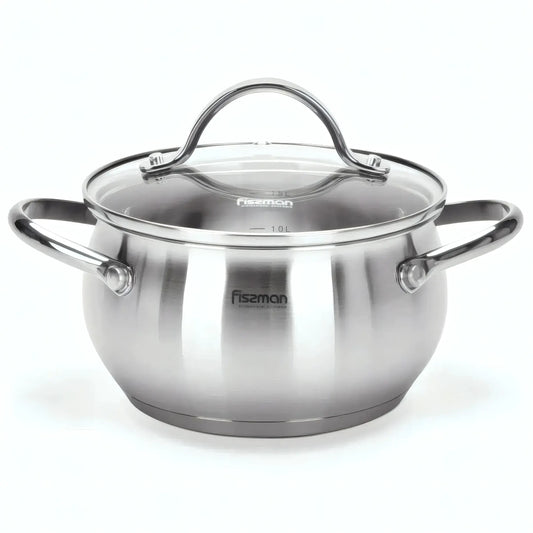
Fissman's stainless steel cookware range is crafted from 18/10 stainless steel with an encapsulated aluminium base for even heat distribution across all stovetops including induction. Browse the full range of stainless steel pots, pans, saucepans and cookware sets.